

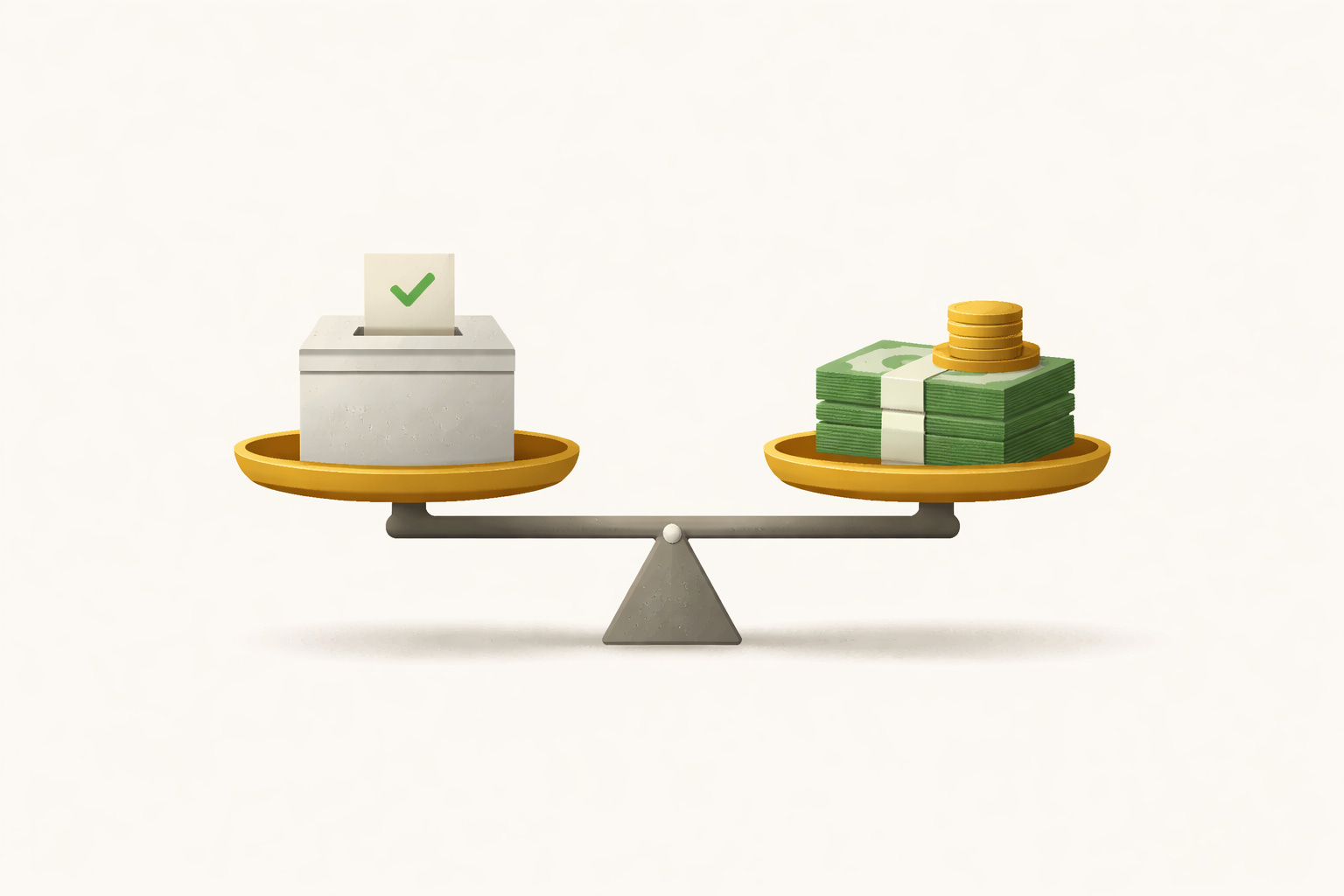
At dinner the other day, the question of political rights and economic rights came up. We were all liberals: we all believed in the indivisible and fundamental equality of individuals—we believed that the street porter and the philosopher are equals, as Smith said.
The question was: aren’t political rights more important than economic? We need the dignity of representation, not the opportunity to make the rich richer. Isn’t the history of freedom the history of political freedom?
At this point the table split between an abstract notion of politics, and an empirical, realistic one. It is little use talking of justice if one doesn’t have a good account of the facts of life. We can talk all day in abstract terms about whether my rights of speech, free association, and personal liberty ought to entail the right to economic freedom—and the basic fact of their inseparability. But the world’s best theory of just redistribution will face an implacable object in the face of a society that cannot generate wealth.
It is instructive to look at history. What use were the sort of political rights we prize before the Great Enrichment? When a man labors for subsistence in a field, democracy can do little for him.
The women’s rights movement at the end of the nineteenth century was divided about the importance of the vote. What women wanted was a whole raft of rights—divorce, property ownership, labor market access, professional status, education, and so on. Campaigning for the vote was the best route to get those rights. Once women were half of the electorate, the rights they wanted would follow.
Political rights are not just inherently valuable as a means of dignity: they are the means by which an individual’s freedom to act in society are secured. When you have few rights, like women in the 1870s, it is obvious that political and economic rights are unified.
A free individual is free to make economic arrangements as well as political ones. The grubby presence of money doesn’t undo that. If you want equality, the right to divorce is not essentially different than the right to own property, the right to speak is not essentially different than the right to work.
What good would it have been to give women the vote but then deny them the right to work or exercise their talents? Giving people the freedom to choose for themselves means accepting that their political and economic rights cannot be easily divided.
Basically, the more individual rights we have, the better situation for more humans worldwide :)
Well put. Is the next question how do you resolve the trade off between political and economic liberty once you have a sufficient amount of both?