

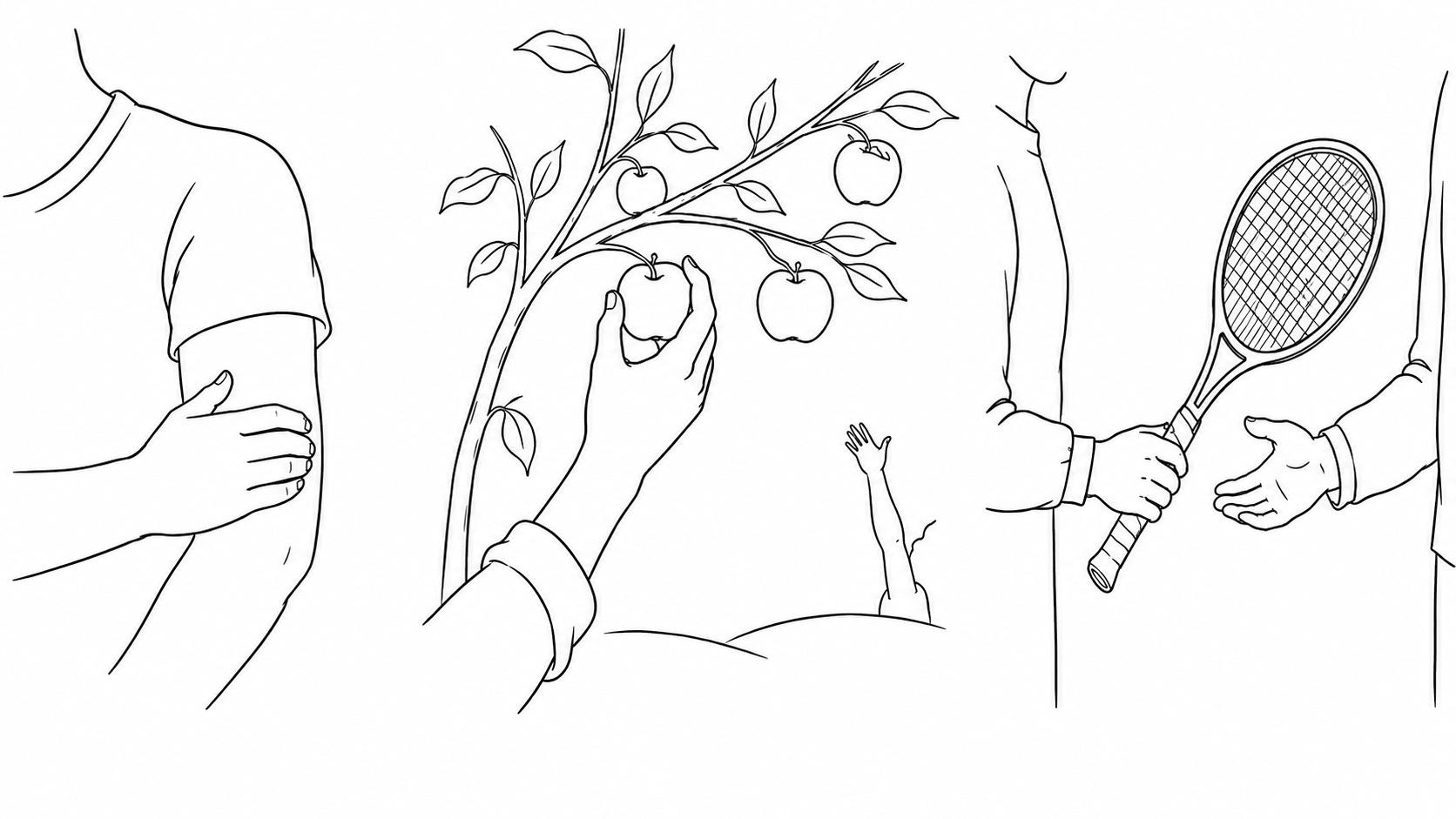
[This is the best I can do at remembering the contents of a short talk I gave yesterday.]
I’m kicking myself for agreeing to give this talk. Not because I don’t want to be here. But because I’ve set myself far too easy a task.
That is, the talk I promised I’d give is ‘Why the fifth chapter of John Locke’s Second Treatise is one of the most important things ever written’. But I think I could persuade almost any group of this, never mind a group predisposed to the idea. And we philosophers enjoy making clever new arguments. Not because we’re contrarians, though some of us are. But because we want to persuade people afresh or anew to the good, the true, and the right.
Okay, perhaps I’m admitting this to add some friction back in. To raise the bar. Nonetheless, I’m going to take the easy way out, and make an extremely easy obvious argument. This is a general argument, which I’m then going to particularise.
The general argument is that John Locke’s works are incredibly important because, overwhelmingly, Locke writes about important things, in important ways, and he mostly comes to important conclusions. More so than any other philosopher. Perhaps even any other writer.
You’re probably wondering what I mean by ‘important’, here. Take your pick! Valuable. Significant to humankind. Big. Fundamental. Foundational. No matter how you constrain me, it’s going to be really hard not to win the easy argument.
I mean, you don’t have to be Fable 5 to think, in 0.3 seconds, of a list of 15 things that John Locke told us that have changed the world, or have the power to do so. You can pick the most important concepts and arguments in moral philosophy, political philosophy, epistemology, personal identity…
He even wrote about education. I’ll admit I haven’t read all the education stuff. Maybe he says some horrible things about locking kids in attics. Like poor John Stuart Mill. That wouldn’t affect my argument! I’m saying that overwhelmingly Locke’s ideas are important, and this can withstand a few bad ones.
Applying the general argument
I’m now going to apply this general argument — that Locke writes about important things, in important ways, and mostly comes to important conclusions — to the fifth chapter of the Second Treatise.
So first, what are the important things? Well, in twelve pages, you get rights, property, work, equality, consent, political society, money. Some people are down on Locke qua economist, but I think if you’re charitable — and philosophers should always be charitable — he was incredibly prescient on economics.
Then, what about the ways he addresses these important things? Well, consider the questions he asks. Just take a couple of those important things. First, take rights. In these twelve pages, he asks: what are natural rights? What grounds them? Do they depend on God, or reason, or what? What are the other kinds of rights? How do we acquire those rights? And more.
Then, take political society. He doesn’t write so much about that, here. You should read the later chapters, which people often overlook. Nonetheless, in these twelve pages, you get a genealogical account of how political society arises, paving the way for Nozick and other good guys. You also get an account of the legitimacy of political society, because Locke is that kind of social contract theorist. He asks what role does consent play in legitimate law-making, and so on.
One question for today
But I want to focus on just one question, for today. It’s the first question Locke raises in this chapter, and it’s basically: “How should anyone ever come to have property in any thing?” This is perhaps the most important question in political philosophy. And for so much else.
Why is that you should be able to exclude everyone else in the world — including the sick, the starving, and the seemingly well-deserving — from eating the delicious apples on your tree? Because that’s what a property right comes down to. It’s an exclusive and exclusionary relation between an owner and an owned thing, protected by a right. And rights come with serious correlative obligations.
Why can’t I eat the apple from the tree? And what’s more, if that’s the only apple tree in the village, then maybe it means I can’t eat any apples! It also has an effect on our status: you’re now superior to me in some way. And you didn’t even ask! You didn’t ask me, or anyone about all this. This seems like an insane imposition!
Really, Locke is raising two questions, here. It’s not just how did you get the apple tree, but why is the result okay? Sure, we can rule out some methods of you getting the apple tree. If you killed everyone else, for instance. But as long as there is one permissible method — maybe it involves some crazy metaphysical idea about ‘mixing’ your labour with physical stuff, who knows? Or maybe there are several such methods. Regardless, if there is a permissible method, then that means the result is okay. And the result is individual property rights.
Locke gets that without these property rights, we’re totally screwed. It’s not just about the apple. It’s the whole dream of peace and prosperity that he wants, and foresees. The modern economy he sees emerging around him in seventeenth-century England.
Capitalism depends on this teeny tiny building block. This astonishingly powerful teeny tiny building block. The right to exclude others from something that is external to you. The ‘external’ thing is crucial, here. The apple is external to you. It’s not like you saying, “You can’t eat my arm!”
Moreover, it’s not even like saying “You can’t have the tennis racket that my granny left me!” We’re not focusing on stuff that’s been left, or fairly swapped, or fairly bought. In this chapter, Locke is mostly talking about the things of the Earth that have never been owned before. That nobody owns, or everybody owns, depending on the Lockean interpretation you take.
So, how come you can exclude me from eating the apple? Even if I need it to live? Even if my kids need it to live? And, of course, this is also crucial to the tennis racket. Because owning the tennis racket depends on a little chain of previous ownerships, which began somewhere.
Locke gets the importance of these questions. He gets how insanely important they are to his dreams of peace and prosperity. To the prosperity that was starting to emerge back then, in seventeenth-century England.
An easy answer
Of course, perhaps you think it’s me who’s insane. And John Locke, too, by extension. He enjoys arguments by extension. Because there is a very easy answer to this problem. The answer is simply that the ends justify the means!
That the peace and the prosperity justify whatever happened back down the chain. So, who cares about the teeny tiny building block? Or similarly, “Hey, it’s already been done! There’s nothing left to claim!” Now, I have a sideline in space philosophy, and I think these ideas can be applied up there, where there is still stuff to claim. But here on Earth, it’s all done! So who cares?
Locke tries that argument in this book, alongside many other arguments. He’s the ultimate over-determined arguer. He’s like the kid who writes down twenty answers to the maths problem, on the assumption he’ll get credit as long as one is right.
But the answer that ‘the ends justify the means’ isn’t going to be good enough for John Locke. This is because he believes in rights, and finding out the truth, and not skipping over the hard stuff.
After all, for Locke, this isn’t just a physical question. It’s not just how can you exclude the other people, in the sense of building up your muscles to push other people away. Or getting the backing of the local tough guys to help you.
Locke is asking this question in the context of this book! Where he’s telling us about basic equal freedom, about basic equal moral status, about the importance of consent to the legitimacy of law. In this book, he’s fighting against the idea that the answer is to give in to the big guy to gain peace and prosperity. He’s fighting against the idea that might is right.
Okay, at this point, let’s take stock. Sorry, that’s a property rights joke…
So, we have the important things that Locke writes about in this chapter, and we have the important ways, in the form of these important questions. But what about the important answers? I promised you some of those.
Well, as of course you know, Locke clearly solves the question of the apple in this chapter, so I won’t bore you with that!1 Rather, I want to end by mentioning two other answers he offers along the way. Extremely important answers.
Two important answers
The first is that Locke concludes that the inequality of possessions is okay, per se. What he cares about is the meeting of basic need, and just processes, and not squandering resources (mainly because he cares about the meeting of basic need). He gets that it’s okay, per se, if person A has more than person B. Indeed, that person A having more than person B can benefit person B!
He thinks that this is okay in the state of nature, and in political society. Sometimes, people read Locke as if he’s some kind of modern-day post-Marx socialist. This is very funny to me!
Locke totally gets that people can have their needs and preferences met with different amounts of things. He gets that investing in the land and in industry ‘grows the pie’, as the kids say. He gets that the equality that matters the most is not to do with the amount of things that people have.
The second answer I want to emphasise is slightly more controversial, among the Lockeans. This is an answer about the value of democracy. Some people say that Locke is a liberal but not a democrat. I have problems with the coherence of that. But I also think his commitment to democracy is very clear in this book.
In this chapter, Locke signals the way that democratic decision-making can obviate the consent problem. This comes back the idea that you didn’t ask any of us before claiming the apple tree. Locke thinks the problem of consent is particularly significant in political society. He signals the role that democratic decision-making can play in legitimating the kinds of property-rights regimes that enable the dreams of peace and prosperity. He talks more about this elsewhere in the book.
This paves the way for many things.
In terms of philosophical theory, it paves the way for a conception of the common good that is not inimical to individual rights, like the American hero Ronald Dworkin would have you believe. And that isn’t dependent on some aggregationist notion, like the post-liberal lawyer Adrian Vermeule would have you think. And, perhaps most importantly, is compatible with full-on hardcore capitalism.
In real life terms, this important chapter paves the way for the legitimate liberal democratic state. Just processes, good law, the meeting of basic need, the limited state — no ‘might is right’ — and incredible prosperity.
Maybe we’ll even get there one day.
[Thanks to GPT for the picture.]
This is a joke..