

Probably you have seen Pluribus by now, the new AppleTV show in which a virus turns everyone on earth into one collective mind apart from eight people. (I liked it a lot for the first seven episodes, then I felt the plot went into a holding pattern for a new season. Fair enough, it’s TV! But I want to know what happens without a whole other season…)
A lot of commentary has focussed on the “joined” people being like an LLM. Although the writer, Vince Gilligan, denies this, there are so many moments when the joined do very LLM-like things, and things that are discussed a lot in LLM discourse. (Read Hollis if you are interested in this.)
What I found more interesting about the joined, though, is the way that individualism becomes a more acceptable belief in the face of the collective.
The plot involves the main character, Carol, learning to take the joined seriously (and even sleeping with one of them, but that section doesn’t always make a lot of sense), and a large part of the show is about how to cross partisan divides. Ultimately, though, that doesn’t work. The joined are just too collective to respect Carol as a person. What does work is Carol’s stubborn sense of independence.
The opening sequence when the “joining virus” first infects humans shows the newly joined going around and forcing others to join them, either by kissing them, or by licking a communal box of donuts, or incubating the virus in petri dishes…
By the time everyone other than eight people have joined, though, the new collective is super nice and happy and literally wouldn’t harm a fly or even pluck an apple. It’s dramatically interesting to show a disagreeable individual refusing to join a group of smiley smiley people. O one can smile and smile and still be a villain! (The way they joined are presented and characterized is one of the main strengths of the show.)
But the dark core remains—they say they love her, but they don’t want her to exist separately from them. If they could lick her food and force her to become one of them, they would.
Community has to be voluntary, and no amount of telling Carol it is simply better to be a joiner can make her give up her sense of individual self. One man’s blissful community is another woman’s loss of autonomy and identity.
Individualism is easily maligned as “atomised individualism” or “pernicious individualism”. But the question of “would you join” at the heart of Pluribus refocuses on the real idea of individualism: you are a unique and autonomous person of equal worth with all others, who should not be forced into a state of living against your will.
Collectivist politics so often involve a certain amount of “with us or against us” and this mood is taking over many parts of the political spectrum today. Much in the way that Trump and the tariffs persuaded Noah Smith to re-think the value of libertarian ideas, I suspect that when confronted with the “community” of the joined, a lot of people would choose individualism the way Pluribus does.
Some of us have a greater appetite for community than others. One of the unjoined does in fact choose to join (it is significant that she is an impressionable young person, not a fully developed adult; it is quite a poignant scene) but the show clearly doesn’t think that the professed bliss of the joined is any sort of compensation for the loss of individuality.
At the end, we discover that the joined have got hold of Carol’s frozen eggs. They don’t need her permission (under their weird and slightly inconsistent morality of non-interference) to use these eggs to get her stem cells. At which point they can create a virus that will “join” her to them. However, they are also obliged (again, under their own morals) to give her whatever she asks for. So she gets an atom bomb, to prevent them from screwing with her eggs.
Carol has been friendly with them up to this point. Now she rejects the joined and agrees to work with one of the other non-joined characters, Manousos, who wishes not only to return the world to normal, but to destroy the joined, who he thinks are evil. I expect the show will prefer Carol’s approach, but either way after the appalling destruction of the teenage girl’s individuality, the show ends in a state of classic American resistance.
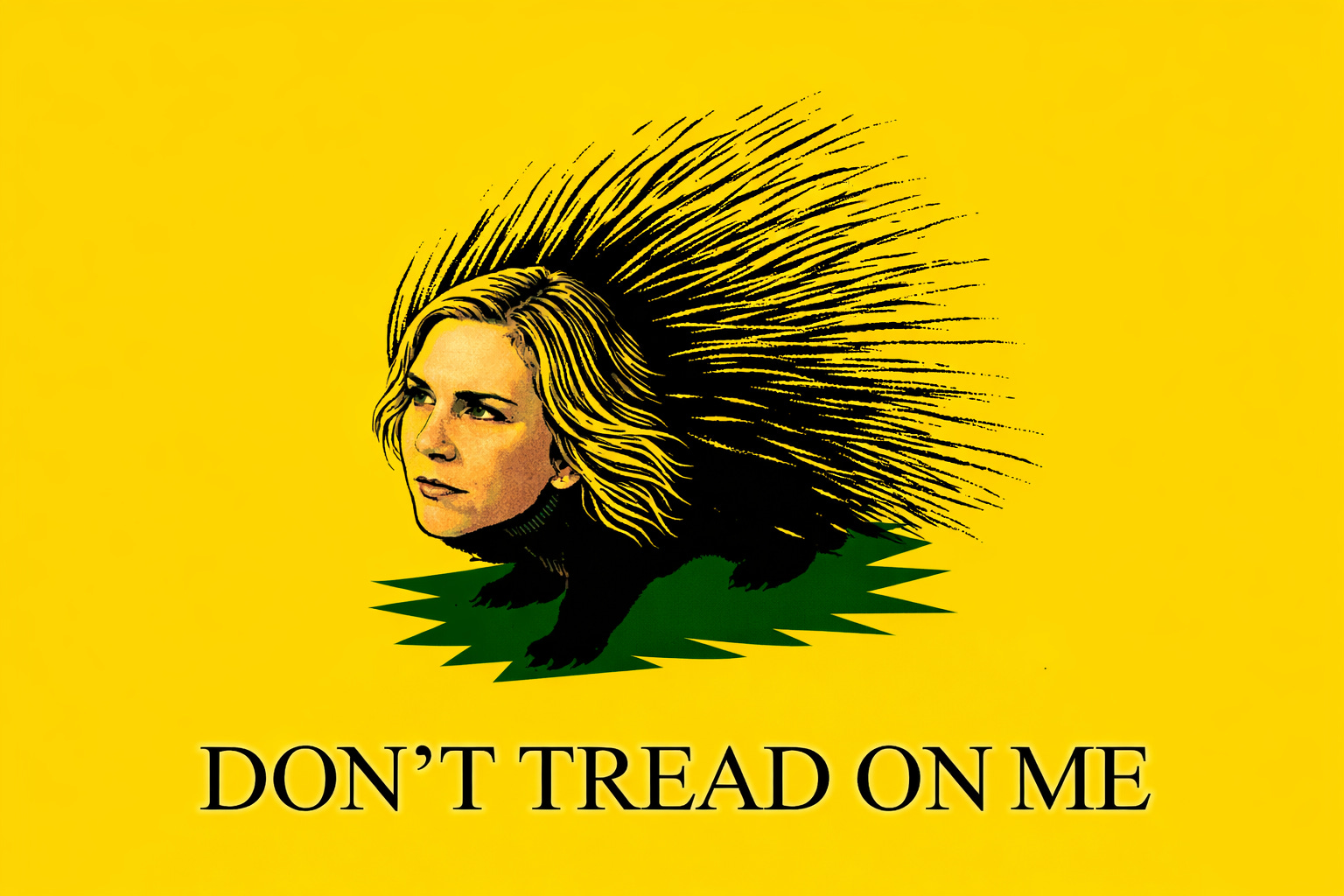
It would not be inconsistent to have the words “Don’t Tread on Me” appear at the end, perhaps with the libertarian porcupine rather than Gadsden’s original rattlesnake. Carol is something of a porcupine—prickly but vulnerable, only dangerous when she’s attacked—and however much I felt the last few episodes began to drag, I never tired of her insistence on her own inviolable identity.
I loved this analysis, thanks Henry Oliver for this. I think what works really well in the show is the unexpected twist where the "joined" are actually nice, kind and helpful -- while Carol has a tough character, a strong personality and can even be dislikable at times. It makes you question whether we really root for an individual per se, or if we only do it only when we like that person. If we really stand up for our values.
Very interesting piece on the individual-based focus of classical liberalism rather than collectivism, especially given recent current events: Trump's blame of Somalis as a group, rather than blaming malign individuals, or the overreach of identity politics in an age of polarization and the knock-on effects for liberal democracy.